The short answer: You can develop a disposable camera at home, but it takes a changing bag, a developing tank, C-41 chemicals held at a steady 102 degrees Fahrenheit, and a scanner, and one slip ruins the whole roll. For almost everyone, the easier and safer route is a film lab. You mail or drop off the camera, and the lab opens it in the dark, develops the film, scans it, and sends your photos back. At The Icon in Los Angeles, standard disposable camera developing with scans runs about 2 business days.
So you found a disposable camera in a drawer, or you shot one at a wedding last summer and never got around to it. Now you want the photos. The good news is that the pictures are almost certainly still safe inside, and getting them out is easier than it looks. This guide covers what is actually inside a single-use camera, whether developing one at home is worth it, and the simplest ways to get yours developed, scanned, and printed.
What is actually inside a disposable camera
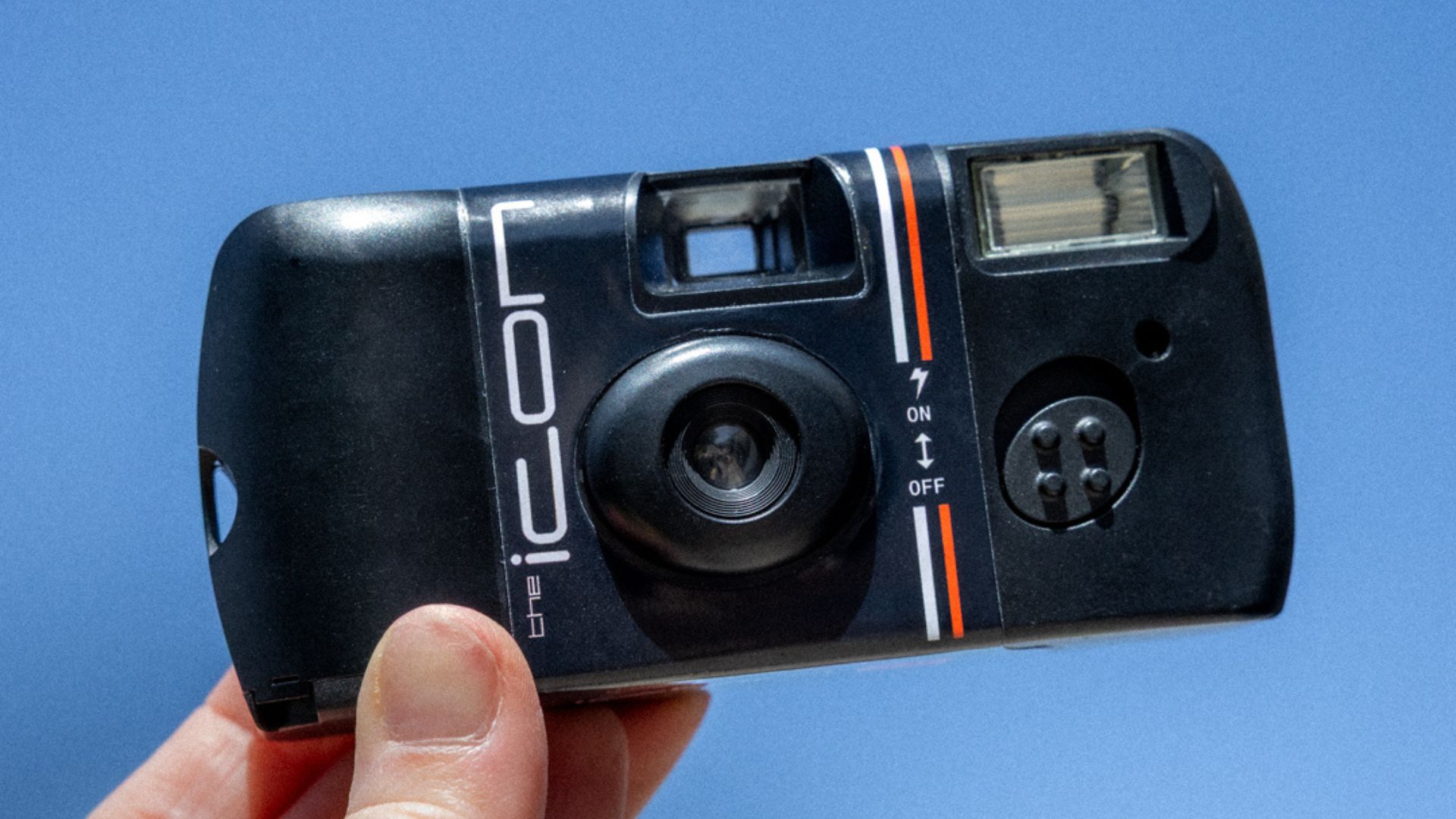
A disposable camera, also called a single-use camera, is a simple plastic and cardboard shell built around a standard roll of 35mm film and a small fixed-focus lens. Most of them use regular C-41 color film, the same chemistry as almost every color roll you can buy. A Kodak FunSaver is loaded with Kodak 800 film. A Fujifilm QuickSnap uses Fuji 400. There is nothing exotic in there, which is exactly why a lab can develop it with the same process it uses for any other color roll.
Here is the part that surprises people. The film inside a disposable winds in reverse. When the camera is built, the whole roll is pulled out of its canister, and every time you take a photo and advance the wheel, that exposed frame is wound back into the light-tight canister. By the time you reach the end of the roll, all of your shots are already tucked safely inside the canister. That is why a lab can crack the camera open and your pictures are fine, and it is also why you should never try to pop the back off yourself to peek.
Can you develop a disposable camera at home
Yes, it is possible, and people do it. But it is more involved than most tutorials make it sound, and color film is the least forgiving kind to start with. Here is what the job actually requires.
- A changing bag or a fully dark room so you can open the camera and load the film onto a reel without exposing it to any light.
- A developing tank and reels to hold the film while the chemicals go in and out.
- A C-41 color chemistry kit with developer, blix, and stabilizer. Black and white film uses different chemicals and is more forgiving, but most disposables are color.
- A thermometer and a way to hold temperature at roughly 102 degrees Fahrenheit, or about 39 degrees Celsius. C-41 is temperature sensitive, and even a few degrees of drift can shift your colors or ruin the roll.
- A way to dry and then digitize the negatives, which means a dedicated film scanner or a camera and macro setup, because negatives on their own are not something you can share or print until they are scanned.
The honest tradeoff: a starter kit and the gear add up, the chemistry has a shelf life, and your first few attempts are where mistakes happen, on the one roll you cannot reshoot. If you love the process and plan to develop film regularly, home developing is a rewarding hobby. If you just want the photos off one or two cameras, a lab will almost always give you cleaner scans for less hassle and often less money than buying all the equipment.
How to get a disposable camera developed at a lab
This is the route most people want, and it takes about five minutes of effort on your end. Here is how to do it right.
- Leave the camera as is. Do not try to open it, rewind it, or force the film out. If the counter has not reached the end, you can keep shooting, or just send it in partially used.
- Find a lab that develops single-use cameras. A dedicated film lab is the better choice over a big-box drugstore. Many pharmacies and retailers have stopped developing film on site and now ship it to a third party, which adds weeks and gives you no control over scan quality.
- Decide what you want back. Digital scans, prints, or both. Scans are what you share and post. Prints are physical copies. Most people want digital scans, and add prints if the shots are for an album or a gift.
- Mail it in or drop it off. If you are not near a good lab, mail-in developing is simple. In Los Angeles, you can bring your camera to The Icon on Wilshire Boulevard and pick the turnaround and scan options in person. The Icon develops all disposable and single-use cameras, any brand, so it does not matter whether it is a Kodak, a Fujifilm, or a wedding-favor camera with no label at all.
Do not have a camera yet? Start with a ready-to-go kit
If you are reading this because you want to shoot a disposable, not develop an old one, The Icon sells an all-in-one package that skips the guesswork. You get an Icon-branded camera pre-loaded with a roll of Kodak 400 color film, good for 24 to 27 shots, plus a prepaid return label in the box. Shoot it, drop it back in the mail, and the lab develops the film and emails your digital scans, typically within 2 to 4 business days of receiving it.
There are two options: Camera and Scans for 35 dollars, or Camera, Scans, and 4 by 6 Prints of the whole roll for 45 dollars. Return shipping is included, and you can have your negatives mailed back for 10 dollars more. It is a favorite for weddings and party favors, and planning a big event with bulk cameras is easy too. It is the simplest way to shoot film with zero gear and zero setup.
Frequently asked questions
Can you still get disposable cameras developed in 2026?
Yes. Disposable cameras use standard 35mm C-41 color film, and any dedicated film lab can develop them. The Icon develops single-use cameras by mail and in person, and returns digital scans with optional prints.
How do you develop disposable camera film?
The film is opened in total darkness, loaded onto a reel, and run through C-41 chemistry at about 102 degrees Fahrenheit, then dried and scanned. You can do this at home with a changing bag, a developing tank, and a C-41 kit, but most people send the camera to a lab, which handles all of it and returns the photos.
Will the photos still come out if the camera sat for years?
Usually, yes. Film is durable, and old disposables often develop fine. Expect some color shift or added grain the longer a camera has been sitting, especially if it was kept somewhere hot, but the images are typically still very usable.
Can I just get the digital files without prints?
Yes. Develop and scan gives you digital files only, which is the most popular option. You can always order prints later from the scans or the negatives.
Can CVS or Walgreens develop a disposable camera?
Many drugstores accept disposable cameras but no longer develop film in store, so they ship it to an outside processor. That usually means a longer wait and less control over scan quality than a dedicated film lab.
How many photos are on a disposable camera?
Most disposables hold 24 to 27 exposures on a single roll of 35mm film.
Should I open the camera before sending it in?
No. Opening the back can expose and ruin your photos. Leave the camera intact and let the lab open it in the dark.
Ready to see your photos? Mail in your disposable camera or drop it off in Los Angeles, and let The Icon develop, scan, and print it for you. Developing film in the Miracle Mile since 1999.